This is where it all began: The first Helsinki Horse Show in 1985 at Helsinki Messukeskus was a dream come true, the realization of a grand vision, and a huge success. 10,000 visitors enjoyed a new kind of international glamour in the world of equestrian sports. The world’s best riders came to Helsinki and were thrilled by the event. In just its second year, Helsinki was awarded the prestigious World Cup status: the Volvo World Cup.
We had this crazy idea: we wanted to create the world’s best indoor competition—nothing more, nothing less. We didn’t start out cautiously; instead, we set the bar as high as it could possibly go. In everything we did, only the best was good enough.
– Ote Horse Show’n kirjasta Muistoja vuosien varrelta
The first year was a complete success. The sense of accomplishment was incredible. Foreign riders are still talking about the first Helsinki Horse Show.
The first year, however, was unprofitable, which is no surprise, after all, the first year is always difficult. The next steps were therefore clear. We had to keep going to cover the losses. We knew where the money was going, and by plugging those holes, we were able to stay within budget in the following years.
The riders considered the first year such a success that, led by David Broom, they strongly urged that a World Cup event be held in Helsinki. The Helsinki Horse Show impressed the International Equestrian Federation (FEI), Max E. Ammann of the World Cup series, and Volvo. Since 1986, the Helsinki Horse Show has proudly held World Cup status.
“Friendly Helsinki” is a concept well known to the world’s top riders. The riders, grooms, and horses have been well taken care of, and everyone has thoroughly enjoyed themselves at the Helsinki Horse Show.
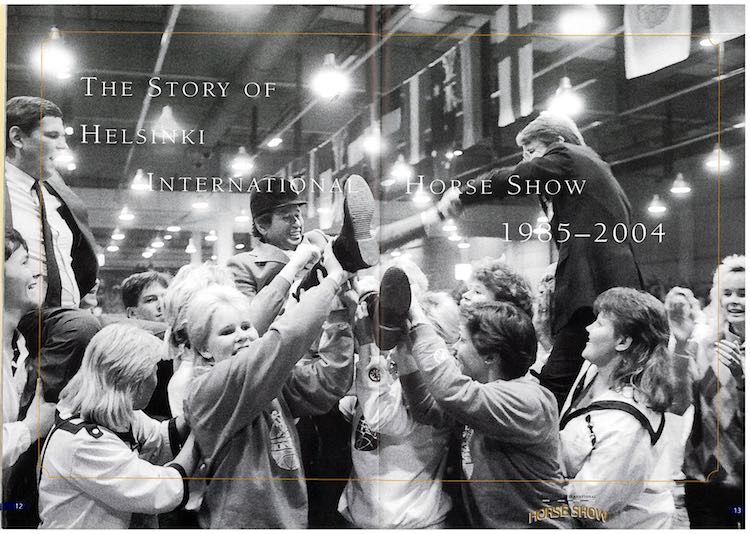
Hugo Simon, a huge fan favorite, being joyfully handled by enthusiastic volunteers (photo from the Horse Show book *Memories Through the Years*)
In its first year, there were about 250 volunteers, and that number rose relatively quickly to 350–400. Today, the Horse Show is one of the largest volunteer organizations among World Cup competitions. The large number is due to the fact that the event is essentially double-staffed. Volunteers spend half their time working on the project and can spend the other half watching the event.
The Horse Show still has volunteers who have been involved every year since the very first Horse Show. One of them is Reija Liusvaara, a true Horse Show superwoman. Reija acts as the “mother” of the staff, that is, she’s responsible for ensuring that the large team of volunteers is assembled, informed, equipped, and well-fed.
Every time, I want to do a good job and feel good about what I've done. I want everyone to feel good.
– Reija Liusvaara
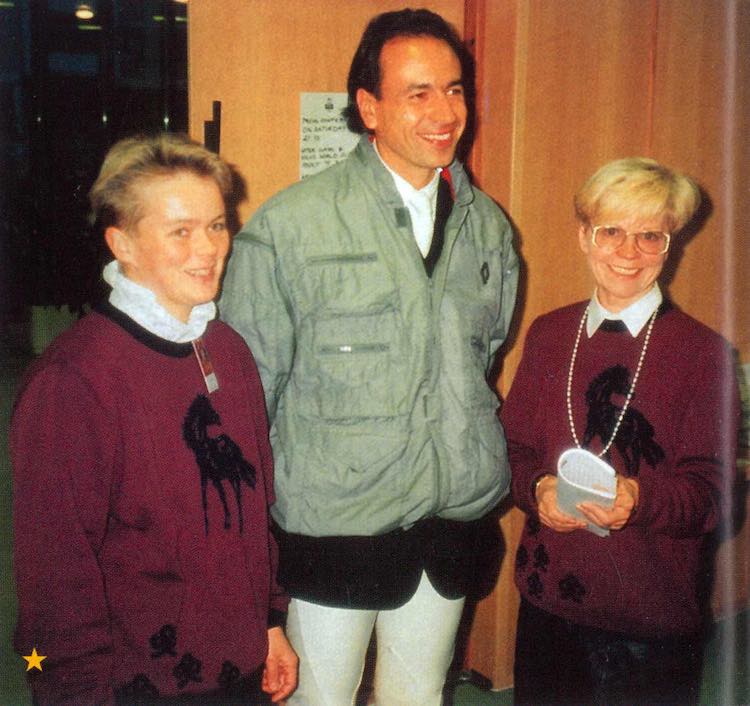
Reija Liusvaara, Olympic champion Pierre Durand, and Maija Koski, who served as press officer. Photos from the book *Helsinki International Horse Show – Memories Through the Years*
The Horse Show developed and grew in all areas right up until the recession of the 1990s. The event kept attracting new high-profile riders, the budget ballooned, prize money increased, and attendance soared. It was a time of real economic euphoria, just like in the rest of Finland.
The recession hit the Horse Show with a delay. The years 1992–94 were the hardest, even though the worst of the crisis had already occurred nationwide. By all logic, the competition should have collapsed, since it was built on the tremendous boom of the 1980s. However, that did not happen, and the recession was not visible from the outside. Despite all the hardship, this one festive weekend managed to stand out in an otherwise gray everyday life.
The only place where the recession was evident was at the expo. In 1992, there were far fewer expo attendees than usual, and this was evident in the empty halls. The following year, the situation was resolved by giving up the space that had been expanded in 1990.
The post-recession period was a time of preparation for the 1998 World Cup final.
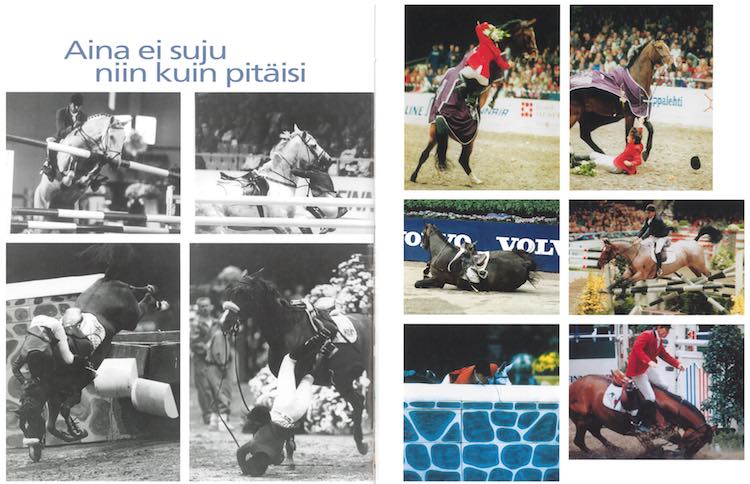
Photos from the book *Helsinki International Horse Show – Memories Through the Years*
The Helsinki Horse Show bid to host the 1998 World Cup Final and won in a close vote against Canberra, Australia.
In preparation for the finals, the event moved from the Helsinki Exhibition and Convention Center to Hartwall Arena the previous fall. The Horse Show lasted five days during the finals. The Horse Show has never lasted five days, except now in 2017, for the first time since the finals.
During the finals, the Horse Show drew a staggering 56,000 visitors, and not even a fierce snowstorm could prevent the spectacular finals from taking place.
The final was won by the legendary Rodrigo Pessoa, for whom this victory paved the way to the top of the world. His successful career has continued to this day.
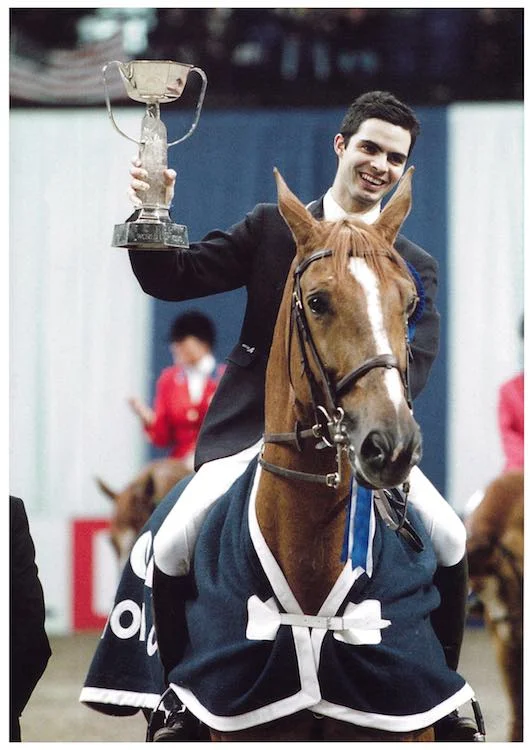
Rodrigo Pessoa & Baloubet du Rouet. Photo from the book *Helsinki International Horse Show – Memories Through the Years*
The Helsinki Horse Show has always offered much more than just intense competition. It’s no wonder that the slogan “great emotions and experiences” resonates so strongly at the event.
Over the years, many magnificent horses have been retired at the Helsinki Horse Show. The first truly touching moment of the Horse Show came when Hugo Simon’s Answer was retired on the final day of the competition. Simon entered the arena with Answer, who had won 68 international competitions, and a wreath was placed around the horse’s neck. Simon thanked his competition partner with heartfelt words, and the horse then began his well-deserved retirement.
Another horse honored at the Horse Show with its own farewell ceremony was Monday Morning, who retired in 1988. The horse enjoyed exceptional success in Finland. Among the horse’s best performances were a 12th-place finish at the Moscow Olympics under Christopher Wegelius, as well as numerous Finnish championships, Finnderby victories, and international placings under Tom Gordin. When the horse’s saddle was removed during the ceremony and it was led out of the arena, it looked as if it understood that its career as a racehorse had come to an end.
In 2015, Eevamaria Porthan Broddell’s distinguished horse, Solos Lacan, retired. The ceremony was moving, and there were plenty of tears. Solos Lacan was unsaddled and his bridle was removed, after which Nipsu climbed back onto the horse’s back and galloped a lap of honor wearing only a halter.
It wasn’t just horses that were “retired” at the Horse Show. The 2003 Horse Show marked Hugo Simon’s farewell competition. Hugo Simon had participated in the Horse Show since its very first year and competed in Helsinki for ten years. As officials carried Hugo out of the Arena in a golden chair to the tune of “Simply the Best,” the legendary star’s performances in Helsinki came to a spectacular close.
The Horse Show was one of the first sporting events in our country to spectacularly introduce VIP hospitality, a customer management concept that was already well-established in Europe at the time. From the very first year, companies have used the Horse Show as one of their most important client events of the year. The practice was an instant success, thanks to major partners who decided to invest in it boldly. It wasn’t until the 1994 European Athletics Championships that other sporting events began implementing similar programs, ten years later.
Corporate guests enjoyed themselves, and some of the largest corporate acquisitions of our time were made at the Horse Show. The recession naturally hit this sector, and corporate participation declined in the 1990s.
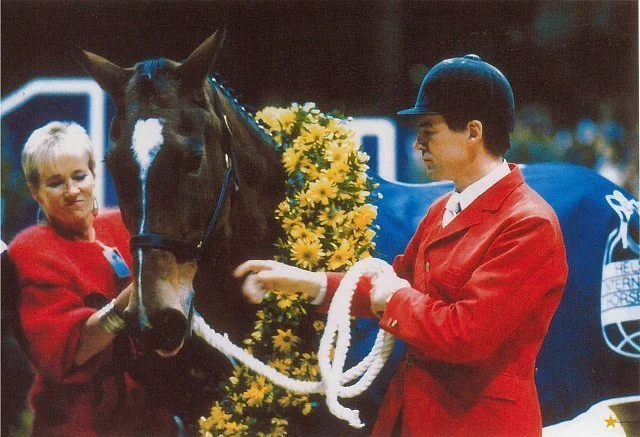
Monday Morning retired in style. Pictured are the horse’s owner, Tutu Sohlberg, and Christopher Wegelius. Photo from the book *Helsinki International Horse Show – Memories Through the Years*
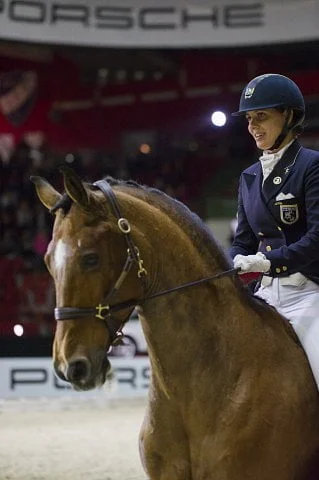
Solos Lacan and Eevamaria Porthan Broddell. Photo © Satu Pirinen
Horse Show Buildings Oy, or HSB for short, was founded in 1988 primarily to manage the infrastructure of the Helsinki Horse Show. Its operations included all construction work, from stables to the perimeter fencing of the warm-up area and VIP facilities. The members of HSB were enthusiastic horse enthusiasts.
HSB was a unique group that worked together for years. During the competitions, the friends would celebrate their members’ milestone birthdays in style with sparkling wine and strawberry cake, and they took annual trips to interesting cultural destinations across Europe. There are plenty of stories to tell about HSB, its history is full of incredible tales.
The name “Mafia” comes from Horse Show event director Tom Gordin, because whenever he was asked, with some concern, how things were going, the answer was always: “WE’ll take care of it, WE know.”
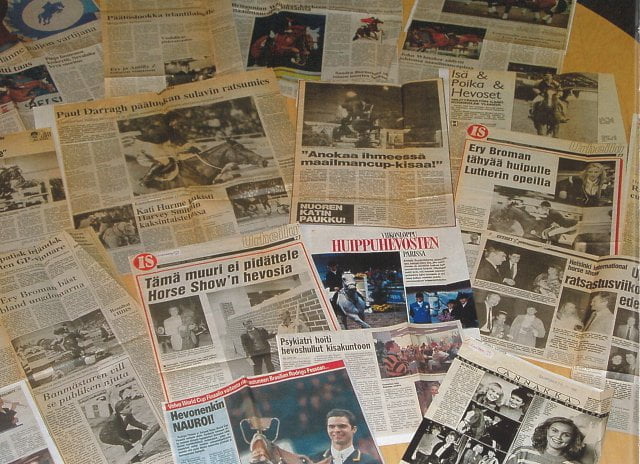
From the very beginning, the Horse Show has received extensive and positive coverage in the media. TV coverage was secured through a long-term agreement with YLE/FST even before the first competition.
The exceptionally extensive and positive media coverage was a phenomenon that became a lasting trend. The number of newspaper articles grew rapidly to over 400 per year. We continue to closely monitor all articles, as well as TV and radio broadcasts, related to the Horse Show on an annual basis.
Of course, public coverage hasn’t always been laudatory or positive. There have been situations and periods when, for one reason or another, the tone of the coverage has been quite critical. We have weathered all the criticism, learned from it, and moved forward.